Blackout · August 2026
What Is a Blackout Tattoo? Pain, Cost & What to Expect
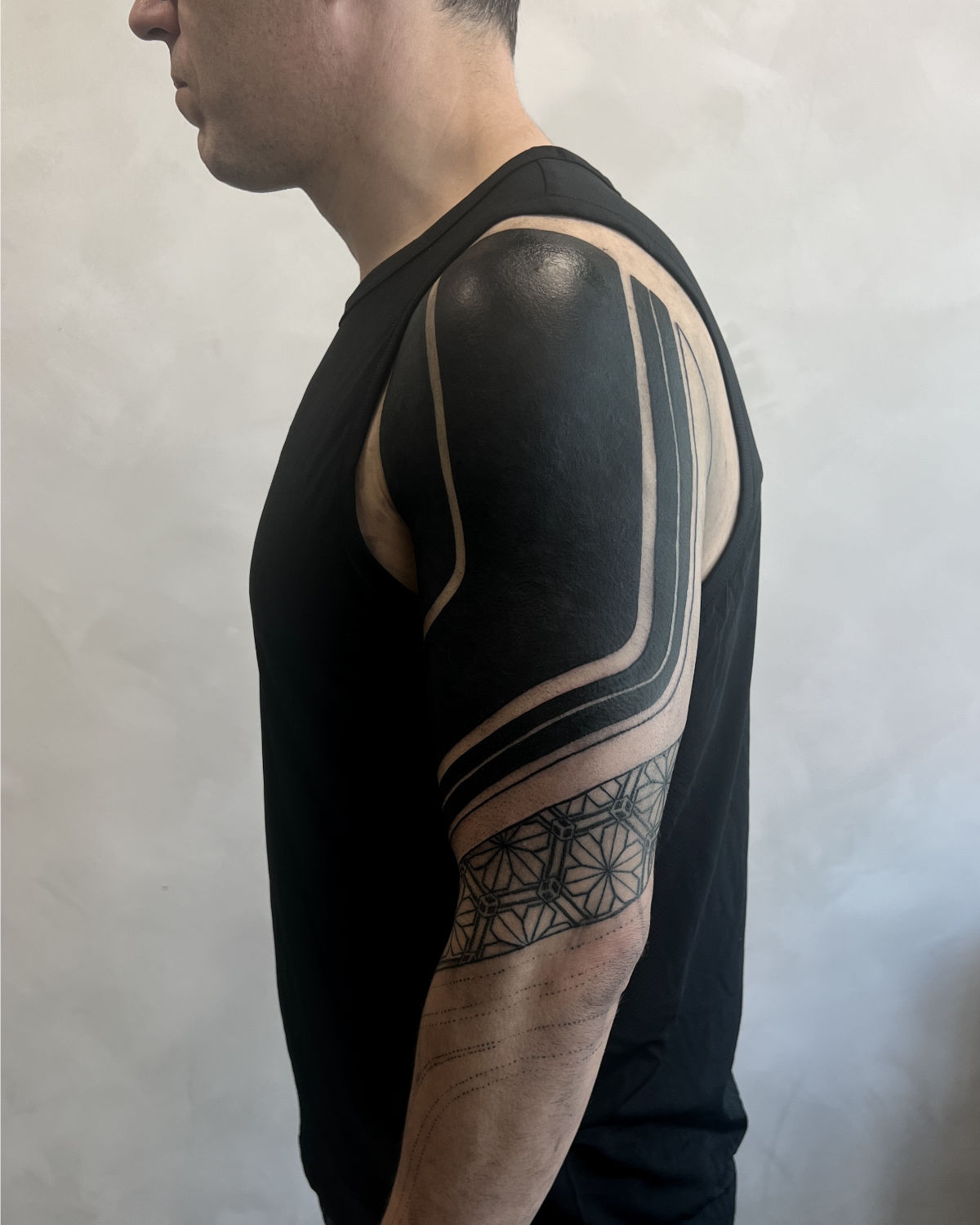
A blackout tattoo is one of the most demanding and most misunderstood styles in tattooing. Here is an honest breakdown of what it actually involves: the pain, the cost, the healing, and what makes the difference between a blackout that stays flawless for decades and one that doesn't.
What Is a Blackout Tattoo?
A blackout tattoo covers a large section of skin, such as an arm, a panel of the leg, or a section of the back, in solid, opaque black ink. Unlike blackwork, which uses black ink to build a design of lines, dots, and shading, a blackout leaves entire areas completely filled, with no skin showing through.
The most striking blackout pieces don't stop at solid black. Negative space, untouched skin left in the shape of a pattern, a mandala, or a geometric motif, turns the black into a canvas rather than an end point. That's the approach I take: the black is the foundation, and the design lives in what's deliberately left untattooed.
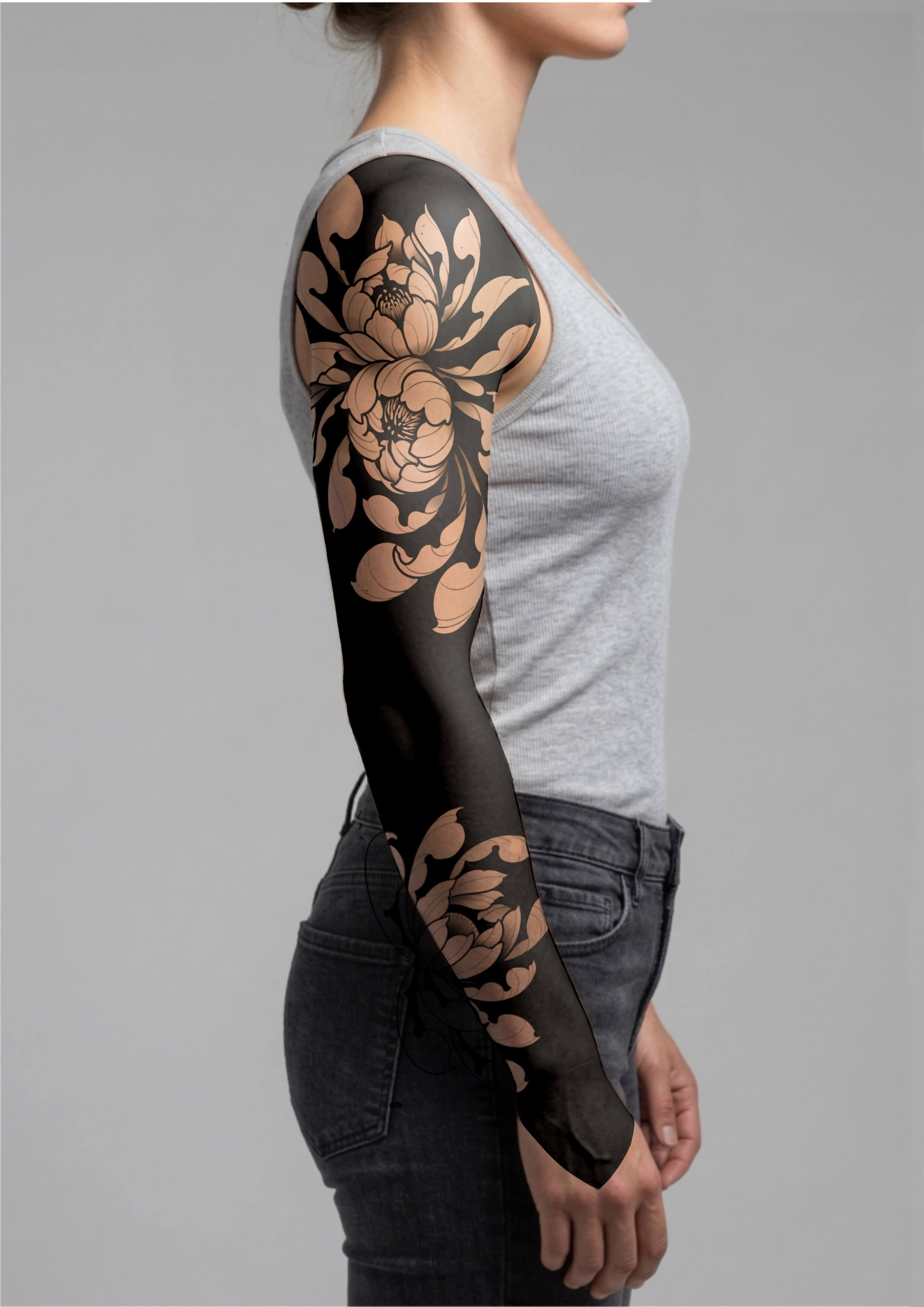
Concept design example, created digitally to illustrate the style. Not a completed tattoo.
Does It Hurt?
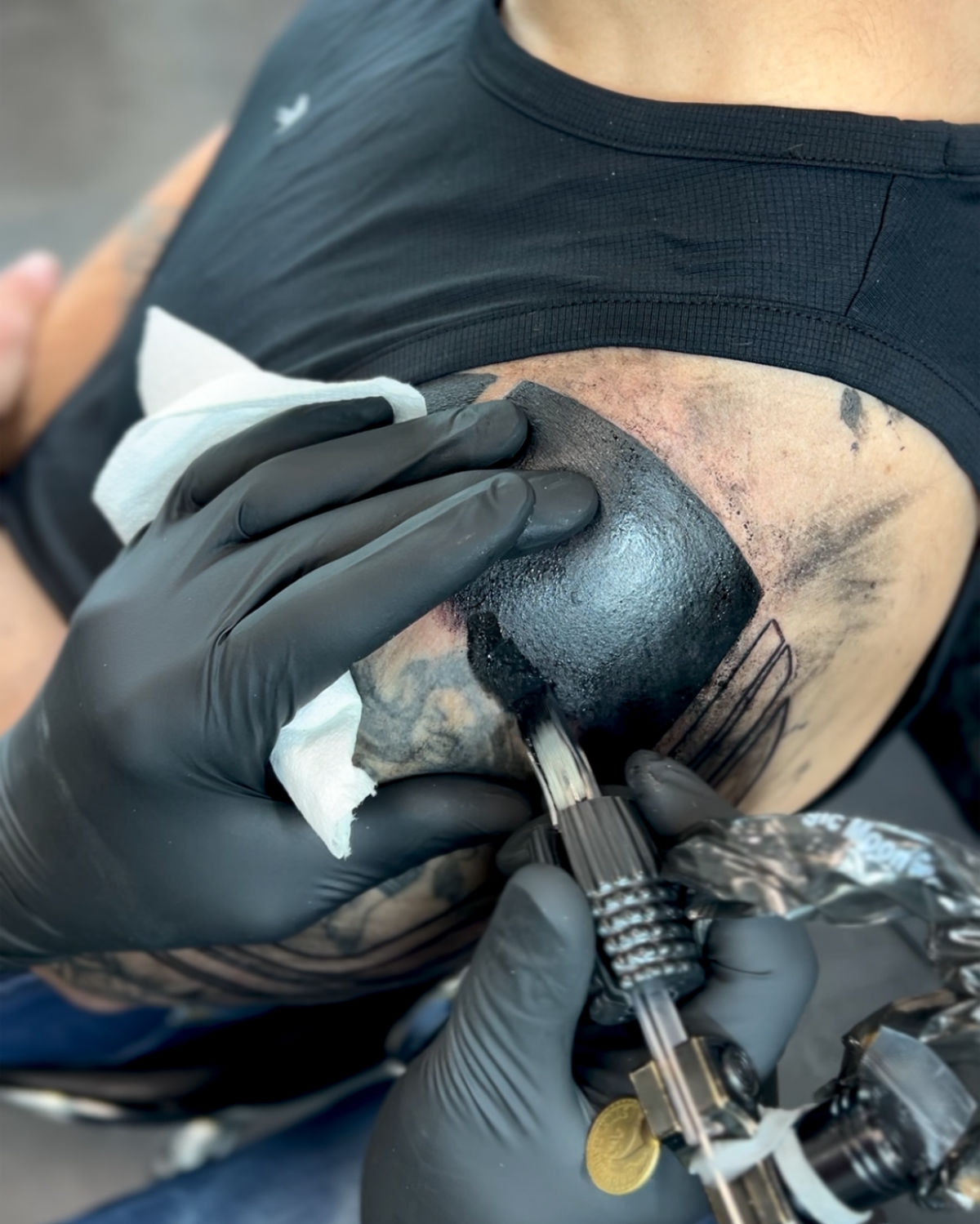
Yes — more than most other styles, and it's worth being upfront about that. To get a truly solid, even black, the same area of skin needs to be worked over multiple times rather than once. Each additional pass goes over skin that's already inflamed from the last one, so the discomfort builds as the session continues rather than staying constant. It's a different kind of pain than a fine-line piece or a single-pass design: less sharp, more cumulative. Most clients manage it fine with breaks, but it's not a session to walk into expecting a quick, easy sit.
How Much Does a Blackout Tattoo Cost?
Cost depends entirely on how much surface area needs to be covered. A small panel might be done in a single session, while a full sleeve typically requires several sessions at €850 per session. I work by session rather than by piece, since the number of passes needed to reach a solid, even black varies from person to person and area to area.
We'll talk through the size and placement you have in mind during a free consultation, and I'll give you a realistic estimate of how many sessions your piece will take before we begin.
Healing & Aftercare
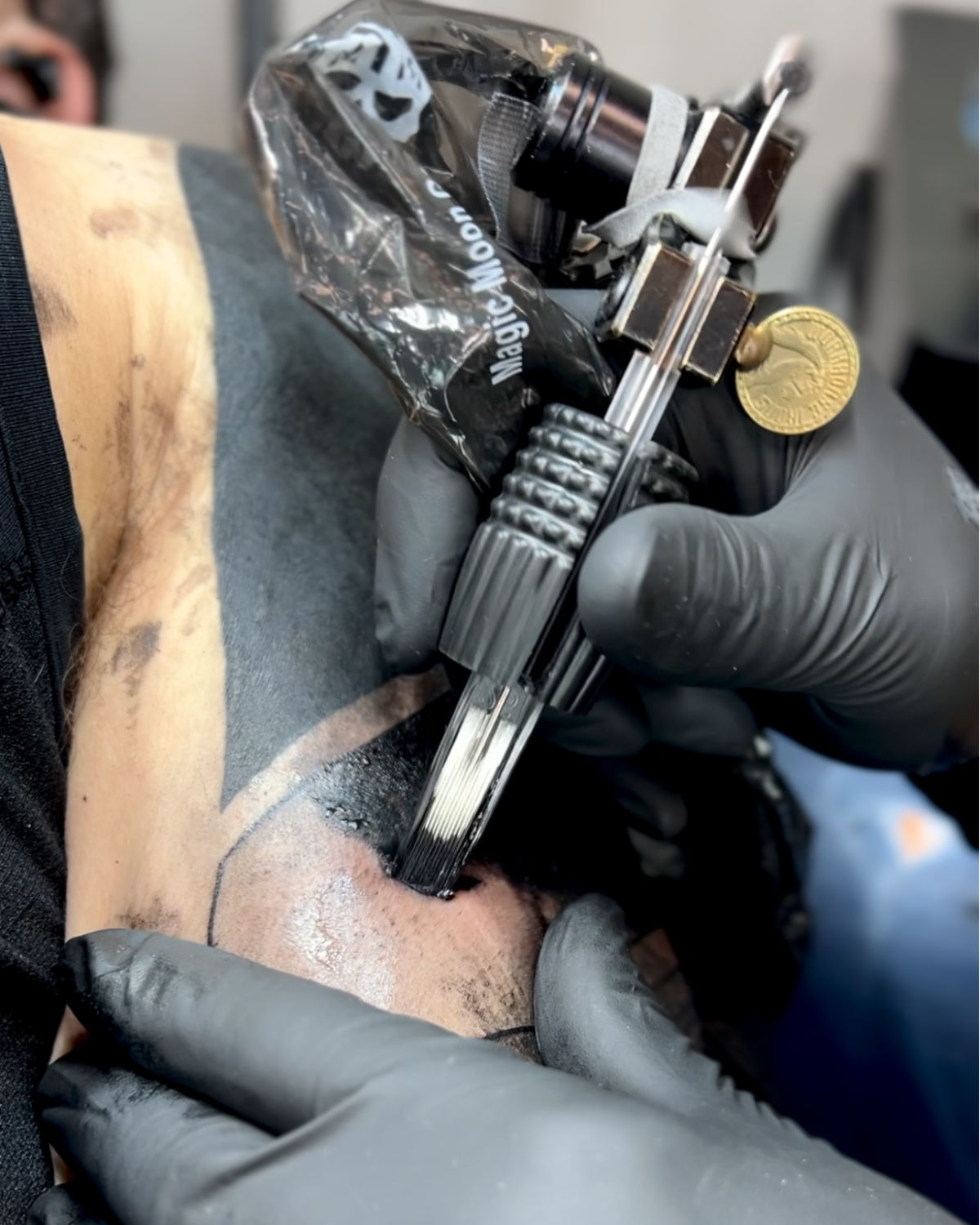
Healing a blackout is more intense than a standard tattoo, simply because of how much skin has been worked. Expect more swelling in the first few days, and a thicker, denser scab than you'd see on a smaller piece. It can look dramatic, but it's a normal part of the process.
During the session, I use Hustlebutter, which keeps the skin conditioned and noticeably reduces irritation while I'm working, especially over multiple passes.
At home, the priority is keeping the scab flexible. A dry, cracking scab loses ink along the crack lines, and on a solid black piece, that shows. Apply a thin layer of aftercare balm several times a day, keep the area out of the sun and out of water (no baths, pools, or long showers directly on the piece), and resist the urge to pick, even at loose edges.
Timeline: surface healing takes around 2 to 3 weeks, but full recovery of the skin underneath can take up to several months. Give it time before judging the final result: a blackout often looks slightly lighter once fully healed compared to fresh out of the session.
Blackout as a Cover-Up
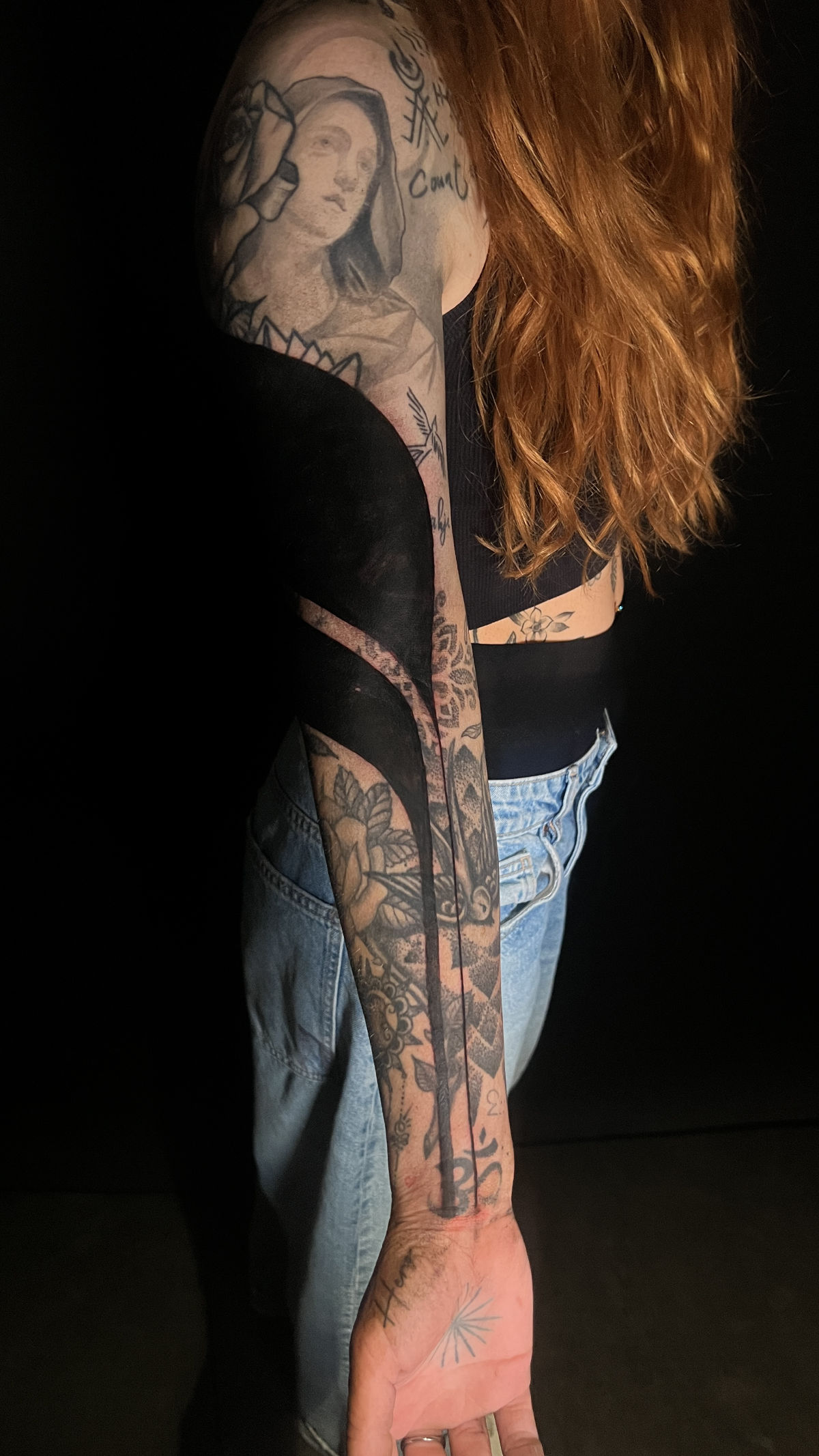
One of the most common reasons clients come to me for a blackout is to cover an old tattoo they've outgrown: a faded piece, a name, something done years ago that no longer fits who they are. A well-placed blackout, especially one built with negative space, can turn an unwanted piece into something bold and intentional, rather than simply hiding it.
The reverse question comes up too: can a blackout itself be covered or removed later? Honestly — not easily. The density of ink involved makes laser removal slow and expensive, often requiring far more sessions than a standard tattoo. If you're considering a blackout, it's worth treating it as a permanent decision from the start, not one you can casually undo.
My Approach to Deep Black
Not every blackout ages the same way. A rushed or under-saturated black fades unevenly and can look patchy within a few years. Getting it right depends heavily on technique and equipment, not just patience.
I work with wide needles and coil machines specifically for this style. The combination gives a deeper, more even saturation than standard rotary setups typically achieve, which means the black stays rich and consistent for years rather than fading unevenly. This is a technique I've built specific experience in, and it's the reason I treat blackout as its own discipline rather than an extension of blackwork.
Get Tattooed
Ready to Begin?
I take on a limited number of custom blackout projects each month. Free consultation available.
Book a Free ConsultationVeelgestelde vraag
Wat kost een blackout tattoo bij James Nidecker?
De kosten hangen af van de oppervlakte die geblackout moet worden. Een hele mouw kost bijvoorbeeld meerdere sessies van €850 per sessie. Tijdens een gratis consultatie bespreken we de omvang en geef ik een realistische inschatting van het aantal sessies.